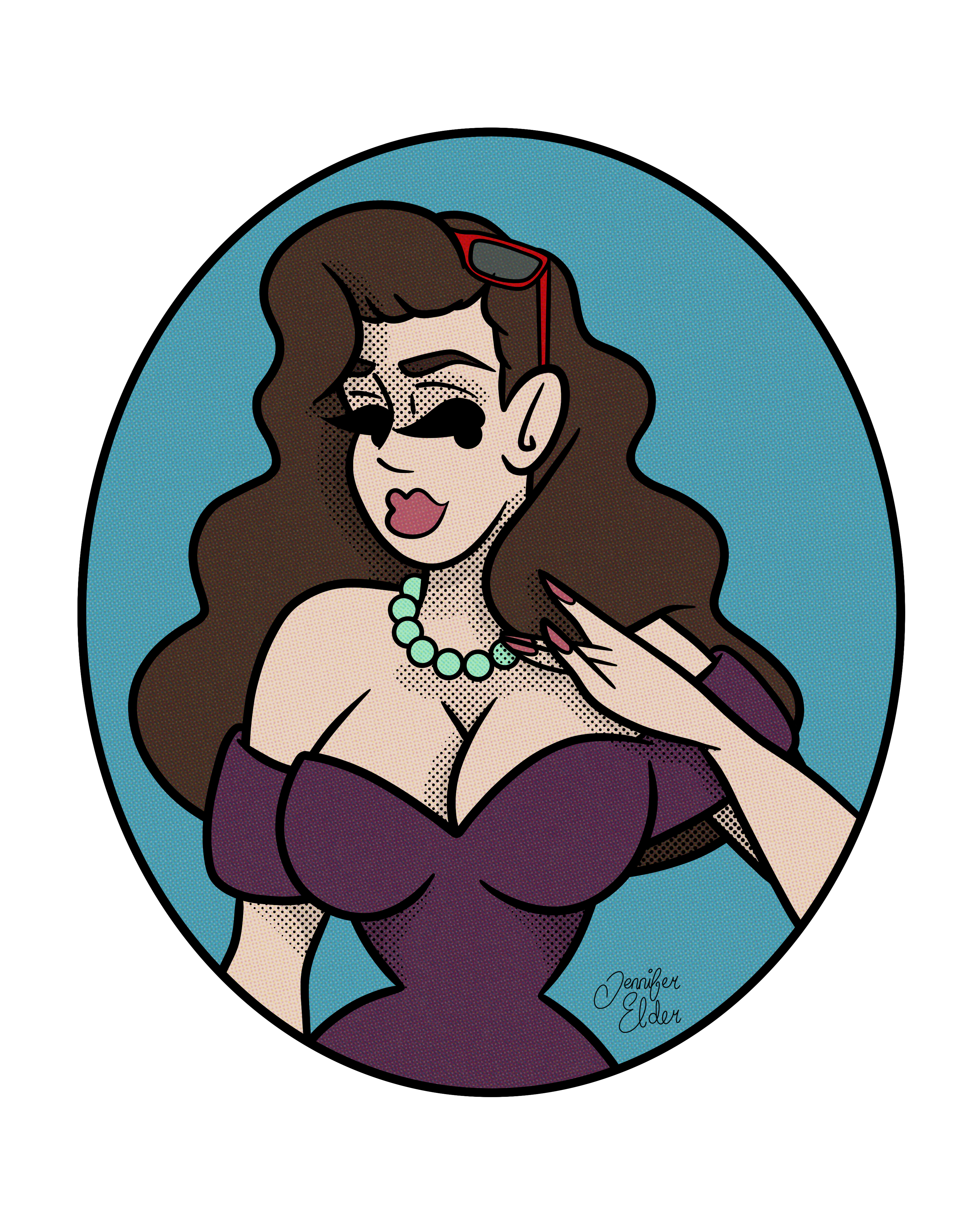
In which I ponder whether, during the apparent apocalypse, it is acceptable to “waste time” writing romance novels.
Some days, after hours spent meticulously crafting an erotic sex scene – Leaping from the barstool, she practically climbs his tall frame, groping wildly for his leather belt and nibbling at his bottom lip. “Are you sure?” he breathes against her open mouth. “Yes. I’m fucking sure.” – I log onto social media, scroll through disjointed discussions of various apocalyptic crises, and find myself sinking into a bottomless pit of guilt.
Why, when the world is burns and people suffer, do I “waste” precious time writing “stupid” romance novels?
Sure, my personal life and my career are firmly grounded in activist principles and practices – they are baked into my very soul – and my research on social movements constantly reinforces the reality that, no matter how amazing, one person cannot change the world alone (and I am not that amazing).
But I am often paralyzed by an obligation to do more, to be more, for the social justice struggles in my local community and around the globe.
And perhaps I’m not alone.
In a recent Portside piece, Juliana Barnet laments the dearth of “stories that would draw us into the heads and hearts of activist characters taking on injustices they face[.] The novels where we can inhabit the characters as they live the day-to-day details of their struggles[.] The television shows that let us accompany activists as they paint signs and pack water bottles to go down to the White House or the local police station to march, chant, kneel or pull down racist statues[.]”
She argues that this absence results from the marginalization of social movements, societal expectations surrounding conformity, and deeply entrenched individualism, suggesting that activists rarely write fiction; when they do, she says, they tend to focus on narrow issues and concerns rather than the broader struggle for structural change.
Reading her list, I can’t help but wonder if, like me, some activists also worry that fiction, even if it revolves around social change, like mine, acts as a distraction from the “real” work of organizing and mobilizing.
I assume I am not alone.
And, so, in this first installment of a (hopefully) monthly blog, I want to justify my beloved, if arguably frivolous, creative pursuit so that, in moments of weakness and doubt, I am reminded that: everyone needs and deserves breaks from grueling efforts to change the world; fiction, like social movements, is about telling stories about ourselves and the world; and, regardless of the form, art is essential to our resistance and the future society currently under construction.
Don’t fret, Sam (and anyone else worrying about these things): It really is okay to spend your “free” time writing fiction!
Reason Number One: Self-Care with Audre Lorde
Before going any further, I want to state, for the record, that I recognize the incredibly privileged position I hold in the world (for which I am tremendously grateful and have enormous White guilt!!). I work diligently to read, listen to, and support individuals from historically excluded groups, but my perspectives are, inevitably, limited by my own circumstances.
So, when I claim inspiration from the great thinker, Audre Lorde, who viewed self-care for queer Black women as “self-preservation” rather than “self-indulgence,” it is not to equate my experiences with hers or to, in any way, appropriate her arguments; instead, I want to propose that, like racism and misogyny, capitalist and imperialist systems, that require entirely unreasonable individual efforts (and luck) to survive, make it nearly impossible for people to thrive.
“For many Black people,” columnist Kathleen Newman-Bremang explains, “the system isn’t set up for them to be able to take a break.” They must be ever-vigilant in enduring entrenched structural racism, the ongoing legacies of the trans-Atlantic slave trade, limited economic and educational opportunities, and numerous other threats to their well-being without sufficient support from government or others in positions of power. It is, I can appreciate, exhausting.
But, to varying degrees, many others also struggle to survive ongoing colonial oppression, deepening economic inequality, a deadly global health pandemic, overt fascist mobilizing, the worsening climate emergency, the threat of nuclear war, and the million other crises that characterize this moment in time. It is draining, even as someone with incredible privilege, to exist day-to-day.
How can I rest until all people, everywhere, are treated with the dignity and respect they deserve, can pursue their fullest potential, and have the resources they require to thrive?
I am, to use Lorde’s term, overextended.
And, as she instructs, it is essential to practice self-care.
Not the capitalist version, which requires ridiculous money spent on bath bombs and alcohol, losing ourselves in the passive consumption of mass media, to supposedly “relax.”
No, as Sara Taylor explains of Lorde, self-care “is an inherently political act. It asserts a rebuttal of the white oppressive state, and is used as a tool for black radical activism and community building.”
“It’s important,” Newman-Bremang says, “to remember that we can stretch — push our minds to their utmost potential…and contribute meaningful work to the world, but as soon as we adopt a capitalistic mindset that the work is our worth, or as Dr. Omolara Uwemedimo tweeted, that ‘busy is a badge of honor,’ that’s when we’ve pushed too far.”
I must remember that my guilt is not about “wasting time writing,” but rather the internalization of capitalist assumptions about productivity, efficiency, leisure time, and creativity.
Romance novels are not, inherently, a distraction from important social justice work.
(A future blog will examine the ways internalized misogynistic and patriarchal attitudes make romance novels, and female sexual satisfaction, taboo, so stay tuned!)
Reason Number Two: Storytelling with Marshall Ganz
“Organized collective action to challenge the status quo, as opposed to the occasional outburst of resentment,” argues well-known American theorist and organizer, Marshall Ganz, “does not ‘just happen.’” It requires consistent, systematic, and creative effort to motivate the masses to engage in efforts to transform their communities and the broader society.
It takes, Ganz suggests, good storytelling.
By sharing accounts – “why I am called, why we are called, and why we are called to act now,” to use Ganz’s religious analogy – activists can help rouse ordinary people to action. “Because we use narrative to engage the ‘head’ and the ‘heart,’” the leadership expert explains, “it both instructs and inspires – teaching us not only how we ought to act, but motivating us to act – and thus engaging the ‘hands’ as well.”
For Juliana Barnet, “good fiction” accomplishes a similar goal, being “uniquely able to pull us into worlds where we’ve never been: a past historical era, a future dystopia, or a Black working class neighborhood across town, allowing us to feel what the characters are going through and connect to their experiences and perceptions through the creator’s portrayal of them.”
During this current period of intense social upheaval, then, she wonders why publication lists aren’t “full of fiction set in the Black Power, labor, American Indian, Chicano, and so many other key movements? Why don’t we have lists of TV shows about people challenging police violence, rather than ones that romanticize policing? Where are the westerns about Native activists fighting mining or fossil fuel industries? The rom-coms starring young people who meet in an environmental or anti-racist movement; the wrenching dramas about peace activists pouring their blood on Trident missiles?”
These are the stories I write: narratives rooted in climate justice, racial equality, decolonization, and prison abolition movements; main characters empowered to take action to improve their communities and their lives; love interests thrust together at protests or occupations, organizing meetings or strikes, forced to navigate, separately and collectively, their individual and collective responsibilities in the world around them.
My work is fiction but, like real life tales of complex and imperfect individuals, engaged in arduous but ultimately worthwhile efforts to effect change, it connects on an emotional level with readers and motivates them to act for the betterment of their society.
Reason Number Three: Day-Dreaming with Antonio Gramsci
Remember day-dreaming?
When, before every pocket contained a computer, if you were bored, you might stare out a window, visualize another time and place, and transport yourself there to complete exciting adventures by yourself or with your friends? It was, in a pre-smartphone era, a useful way to distract from the tedium and torture of human existence.
Similarly, according to Italian Marxist, Antonio Gramsci (1891-1937), known primarily for his description of hegemony as “the ‘spontaneous’ consent given by the great masses of the population to the general direction imposed on social life by the dominant fundamental group,”[1] literature, in all its forms, offers “a way of escaping from the pettiness of daily life…a narcotic against the banality of everyday life[.]”[2]
Perhaps, like Marx’s portrayal of religion as an opiate, this comment was critical; given the fractured nature of Gramsci’s notebooks, written during a fatal imprisonment by the fascist Mussolini regime, it is difficult to know for certain. But, commenting specifically on the serialized novel, marketed primarily to working-class readers, the communist thinker insisted that it “takes the place of (and at the same time favors) the fantasizing of the common people; it is a real way of day-dreaming.”[3] That sounds pretty glorious to me!
Writing is my day-dreaming, my escape from the ongoing anguish of an unjust and equitable society and a rapidly warming planet. My stories are set in an immediately recognizable universe – a few details diverge from “the real world” but the structures should be familiar – and encourage readers to contemplate a different (and hopefully better) future.
Day-dream away!
Reason Number Four: Preparing the Revolution with Breton, Rivera, and Trotsky
Under neoliberal capitalism, and its commodification of absolutely everything, it is a constant challenge to remember the revolutionary potential of the arts and their fundamental importance in the just and equitable world that we fight tirelessly to create; for Marx and Marxists, “the arts and artists are an integral part of society.”
“The communist revolution,” explain Surrealist poet André Breton and Mexican artist Diego Rivera in their Manifesto for an Independent Revolutionary Art (1938), “is not afraid of art. It realizes that the role of the artist in a decadent capitalist society is determined by the conflict between the individual and various social forms which are hostile to him [sic]. This fact alone, in so far as he [sic] is conscious of it, makes the artist the natural ally of revolution.”
Moreover, for revolutionary theorist and politician, Leon Trotsky, the worker takes from “Shakespeare, Goethe, Pushkin, or Dostoyevsky a more complex idea of human personality, of its passions and feelings, a deeper and profounder understanding of its psychic forces and of the role of the subconscious, etc. In the final analysis, the worker will become richer.” “The object of art,” Marx reasoned in A Contribution to the Critique of Political Economy, “like any other product, creates an artistic and beauty-enjoying public. Production thus produces not only an object for the individual, but also an individual for the object.”
In other words, as Rebecka Jackson-Moeser suggests, “Art teaches you how to think and it gives voice to the voiceless. [Through art] you can discover the terms with which you are connected to other lives. This is a very great liberation for the suffering, struggling person who always thinks they are alone.”
Romance novels allow readers to exercise their metaphorical muscles connected to love and empathy, compassion and community, hope and change, and feel their hearts pound in their chests, their private parts tingle. In my case, the stories also open a window to a potential better world.
They remind us, in big and small ways, what we are fighting for and, in doing so, contribute “actively and consciously in the preparation of the revolution.”
So… it is time to stop succumbing to guilt.
At the end of the day, it is essential to remember that creative endeavours are inherently valuable and absolutely worth pursuing. They do not detract from “the cause” but, in sometimes unexpected and subtle ways, often further social justice efforts and efforts to form collective community relationships. They provide a necessary escape from an undeniably difficult reality, help ordinary people connect with activists and social movements, and offer a vision of a reality, a future, that benefits absolutely everyone.
Give yourself a freaking break, Sam, and go write some sexy fiction!!
[1] Antonio Gramsci, Selections from the Prison Notebooks, trans. & eds. Quintin Hoare & Geoffrey Nowell Smith (New York: International Publishers, 1971), 12.
[2] Quoted in Michael Denning, Mechanic Accents: Dime Novels and Working-Class Culture in America (London: Verso, 1987): 67.
[3] Denning: 67.


 Samantha (Sam) Stone Books
Leave a comment